Flapjacks. Hot cakes. Silver dollars. I love pancakes. Waffles are great. French toast is fine. But when it comes to pairing a bit of sweet with my savory at the breakfast counter, pancakes are never my second choice. While waffles and french toast can both do the same things that pancakes can, pancakes do it better. Take fruit for example, especially berries. I've seen plenty a breakfast plate sporting french toast topped with blue, rasp, and/or straw berries. I've seen waffles do the same. Pancakes, on the other hand, can arrive at the table looking plain ordinary--imperfectly circular, burnt golden on two sides, the circumference rounded with a lighter golden ring--they arrive looking like ordinary pancakes until their dressed with small amounts of butter, a swirl of maple syrup, and divided neatly in half, (six times if done correctly). The fork is gently pressed into the golden shell, it's prongs gliding down into the airy center like a pin into a pin cushion. Then, the first bite. Apple. Cinnamon. Warm apples with a hint of cinnamon. Or blueberries. Or strawberries. Or pumpkin. Lemon ricotta. Oatmeal. Carrot cake with coconut and pineapple. Everything, all of it, housed within--and perfectly distributed through--the fluffy batter; the fruit still warm and therefore countering the sweet syrup with a dull tang. It's here that pancakes achieve a level of functionality that surpasses their sweet-variety-breakfast-option comrades. The ability to appear mundane yet act extraordinary. Essentially, it's batter mixed with "stuff", poured round in oil, and lightly fried. A proven formula that manifests itself in many of the world's cuisines. The Korean version is different only in category--savory rather than sweet, paired with soju rather than coffee--the formula is very much the same.
The "batter" is flour sometimes thickened with a fermented soybean paste called doenjang. The "stuff" varies from soil to sea; potato to squid, kimchi to cod. I'm not sure it's possible to cover the Korean pancake in all of it's forms, but compiled in the list below are some of my favorites.
Haemul -- A variation of the green onion kind, or pajeon, which includes various bits of seafood among the long strands of onions. Typically, we're talking squid tentacles, miniature shrimp and clams.
Kimchi -- Exactly as it sounds. It's a kimchi pancake.
Gamja -- Potato pancakes with Asian chives, or buchu.
Gochu -- Made with finely chopped green chili peppers. To the untrained eye (mine) this one can look similar to the green onion version. You'll know it's different when your mouth lights up.
Yachae -- Another play on the green onion pancake (pajeon) only this time with zucchini.
Chamchi -- Tuna mixed with garlic and onions and seasoned with salt and pepper. It's the simplest things that go a long, long way.
Gul -- Made with oysters. I've only stumbled across this one time but it was worth remembering.
Daegu -- Despite what the name suggests this isn't made from random scraps found floating around the city of Daegu, (thankfully), it's also the name for cod. Pacific Cod to be precise.
Dubu -- Thick chunks of tofu more commonly served as a small side plate than in pancake form but delicious all the same.
Bintaetteok -- Mung beans and the kitchen sink. Various vegetables. Sometimes meat. Sometimes seafood. Always a hit.
That's just a drop in the proverbial jeon bucket. Other assortments include shiitake mushrooms and beef (pyogojeon), squash (hobakjeon), lotus root (yeongeunjeon), shredded beef (yukjeon), and edible flowers such as rose or azalea (hwajeon). The picture at the top of this post is a perfect jeon trifecta of kimchi, potato (gamja), and seafood (haemul). In no particular order, these also happen to be three of my favorites and staples among any reputable jeon jib (pancake house). The above three were prepared, cooked, and devoured on the side of a mountain, as jeon also sometimes functions as a hiking snack. Yes, in a perfect world, one I hope to see, Denver omelets will give way as blueberry pancakes will pair with the squid and onion flapjack, creating a perfect sweet and savory pancake harmony, only fully appreciated once the Soju Bloody Mary begins to take hold.
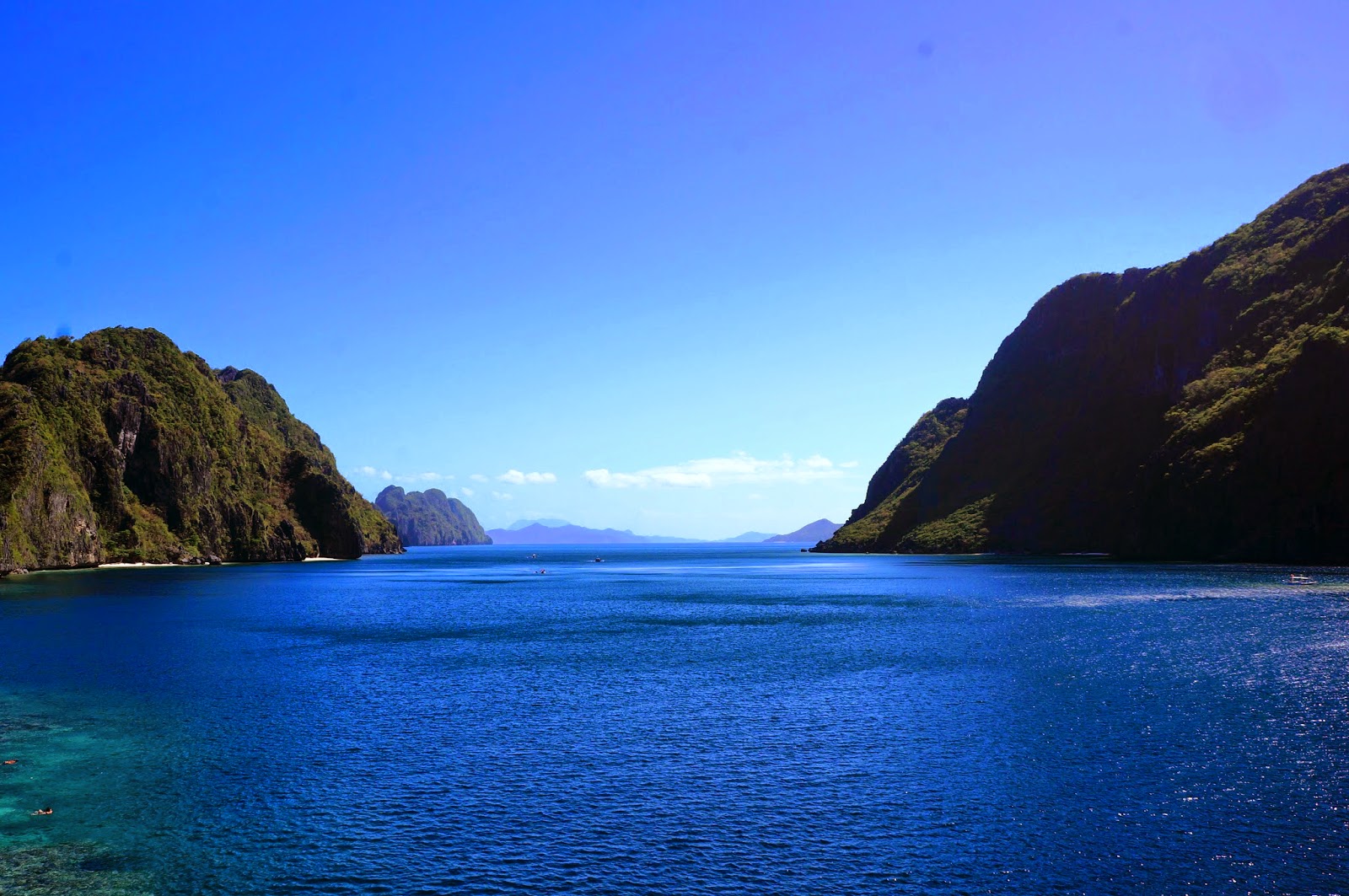
Palawan. Stunning scenery. Secluded beaches. Vibrant reefs. Dense jungles. Subterranean rivers. The incomprehensible beauty of Bacuit Bay. And best of all, the local people, who are equal parts warm, welcoming, and eager to lend a hand. With credentials such as these, it's no wonder that the Philippines' final frontier is a backpacker's haven.
Most travelers touch down at Puerto Princesa airport and then head north for El Nido and the surrounding islands. Coron, with the only northern airport and it's WWII shipwreck dives, is another popular destination to the north. There seemed to be three different itineraries among the traveling hordes. The first and seemingly most popular being: Head north immediately and work your way back to Puerto, stopping along the way if time permits. The second: Start in Puerto and work your way to Coron. From there, depart via Manila. The third, and our course: Start in Puerto. Head north, stopping along the way. Head back to Puerto and depart via Manila.
The time between destinations can be long. There aren't many paved roads and unless you hire a van or book with a tour bus, time tables are hard to come by, if they exist at all. Our aforementioned route took place over the course of two weeks, which proved to be ample enough time for three destinations: Puerto Princesa, Port Barton, and El Nido. Had we more time, a trip to Coron was a day's boat ride away from El Nido. We also made the mistake of staying in Puerto Princesa a day too long, though our accommodations at Puerto Pension made it all worthwhile. (Once again, I was able to nab a great deal through Agoda).
Puerto Princesa: 3 Days
As I said, we could have cut an entire day out of Puerto. The problem was, our flight from Korea landed in Manila around midnight and our connecting flight to Puerto did not depart until 8 the next morning. So after sleeping in an airport we spent much of our first day in Puerto laying in hammocks or napping in the room, which was our plan from the start. Our mistake came in the following days. Thinking we'd like a day to check out the city, and then another day for a trip to the subterranean river, we planned on staying in Puerto for the first 3 days before heading north, to Port Barton. However, even in a sleep deprived, semi-delirious mental state on the first day, we were able to dig the city in between napping and hammocking at the pension. The second day basically became a wash, as we again traipsed around Puerto, and resumed laying about our room. The sole highlight of day 2 being the pile of grilled seafood that we ate for dinner on the boulevard.
Our final day in Puerto was spent at the Underground River, a UNESCO Heritage Site located a few hours to the north. We hired transport through our pension and ended up having an enjoyable day. The tour lasted for about an hour and is well worth the price and the time. There are some shots of us meandering through the cave system in the video posted above. Reader beware though, anyone with a bat-related phobia may want to skip this. At one point, the top of the cave was completely plastered with them, and every now and again, one would dart by overhead.
That evening, we had one more mound of grilled fish down by the water before retiring to our room. Our first stay in Puerto Princesa had reached its' conclusion, but we'd be back for our final night on Palawan.
Port Barton: 3 Days
Port Barton is about a half day's ride away from San Jose Terminal, which is where we boarded one of the jeepneys pictured below. During the Second World War, these vehicles were used to transport troops across the rugged terrain. Today, they remain as the most popular form of public transportation throughout the Philippines. Cargo is fastened to the roof, where it rides with the wiry crew of boys who are responsible for loading and unloading it at various stops along the way. The rapidity at which they were able to scale the sides of the jeepney, all while shouldering a load of mangoes or melons or buckets of water, made the trip seem more like a circus act than a long, somewhat uncomfortable bus ride up the coast and through the jungle.
Just up coast from Port Barton is a private beach turned campground called Toby and Thelma's. This was our destination and moments after our wheeled bodega pulled into Port Barton, we were boarding a small boat and making waves.
Upon arriving, we were greeted by Toby, a cheerful Canadian man who discovered the beach back in the 70's while on a kayaking trip from Coron. Toby's wife, Thelma, is the co-proprietor of the campground and resident chef, cooking three squares everyday for the entire camp. Easily, this was the best food we would have while on Palawan, but it was so good, it's really unfair to draw comparisons.
Each campsite includes a large, two-person tent, though I'm positive three adults could share one tent if need be. Outside of the tent is a nice area for relaxing, complete with table, chairs, hammock, and fire pit. The camp attendants come around to each camp around dusk to light the citronella torches and deliver firewood. The campsites are sheltered by a wooden structure with a palm thatched roof to keep each site nice and dry in the event of rain but mostly to inhibit rogue coconuts from cracking the heads of sleeping guests. There were eight campsites at the time of our visit with plans to construct a couple of more.
Aside from the solitude and the scenery, the campground comes fully stocked with beers, booze, ocean kayaks, fishing equipment, snorkeling gear, and the greatest outdoor shower in the world. Just give Toby word the night before if you think you'd like to go fishing or snorkeling the following day. The kayaks are first come first serve, but it's worth taking a few hours to investigate the rest of the coastline. There is a small village, not too far away, where we beached our vessel and hoofed into the jungle with a nice older man who guided us to a waterfall. Incredibly refreshing after paddling across open water with the sun berating us.
Our time at Toby and Thelma's, though limited to only 3 days and 3 nights, was most definitely the highlight of our two week trip. What's better than good food and good people? Not much. Maybe falling asleep every night to the sound of waves crashing outside of your tent. Maybe the way the stars come out when you're isolated and without electricity or light pollution anywhere in sight. Maybe a long, desolate stretch of white sand beach. Or maybe the way the sun goes down in paradise.
El Nido: 8 Days
Again, about half a day of travel lay ahead of us as we rose early and boarded the banca that would ferry us from Toby and Thelma's to the neighboring town. From there, we'd reserved two seats on a truck that was heading towards San Vincente, on the other side of the jungle. Once there, we'd have to stand along the Northern Road and flag down a van, truck, or bus heading for El Nido. Already complicated enough, the entire plan was compromised upon reaching our first destination when we learned that the truck had left without us. Apparently, the driver thought that he would have room for us, but things must have changed that morning. Now, we waited near the dock as Thelma negotiated some other form of transport.
I should back up. The previous evening, Toby offered to book us each a seat on a tour van that was leaving Port Barton in the morning. The van would be air-conditioned and go directly to El Nido. It would also cost about 850 pesos per seat. Based on our research, this seemed a little high, so we decided to stick with our original plan, knowing that once we reached the North Road, it shouldn't take longer than 30 or 40 minutes to wave something down.
Thelma informed us that there would be no more trucks leaving town that day, but she was trying to arrange motorcycles for the two of us. Almost on cue, dozens of motorbikes began pulling up to where we stood. In minutes, we were off, zipping along the dusty road that serpentined it's way through the jungle. Thirty minutes was all it took to put us on the Northern Road, and thirty minutes later, we were sitting in the back of a van, making our way up to El Nido, all for the grand total of 450 pesos each, (150 each for the motorcycle drivers, 300 each for the van).
Nestled beneath the gorgeous limestone cliffs of Bacuit Bay, and composed of more than 40 islands and islets, El Nido is Palwan's most popular tourist attraction. Island hopping is one of the more popular activities among the droves of tourists, and just about every establishment in town offers the three tours: Tour A, B,and C. We booked Tour A and Tour C through The Alternative, a pension on the main drag that also served pretty decent food. The tours begin early in the morning and most of the day is spent boating around from island to island. Lunch is included and is prepared and served by the tour guides. The food; grilled chicken, grilled squid, cold vegetable salads, paella, and fresh fruit; was delicious. There are snorkeling areas at each stop, though it was plankton season during our trip, so the water wasn't as clear as it normally is. There also appeared to be too many boats and tour groups in the water, so much of the coral was disturbed, damaged, or dead. We did see some really nice coral and reef-life during a break from our scuba diving lessons, but I think we were in an area of the bay that doesn't attract the tour boats.
Keeping with the "water" theme, we spent two of our days getting SCUBA certified through Adventure Scuba. We picked Adventure Scuba because it was cheaper than a lot of the other large shops in town, but also because most of the reviews spoke about smaller class sizes. We ended up having our instructor, Bernie, completely to ourselves for the two-day course. We had seen other boats so overloaded that some instructors had 6 or 7 students. Bernie took his time with us and made sure that we were really comfortable with everything before moving on to the next step and the deeper water. Bernie and the crew also cooked us lunch everyday, and provided us with snorkeling gear for our down time between lessons and dives.
Three consecutive days at sea began to take it's toll on us, a realization we both came to while sitting on the balcony one night, the two of us feeling as if the entire world was rocking back and forth. We decided to spend a day relaxing near the water, rather than on it. The only beach in town also acts as a harbor for the tour boats. Swimming in the water is not recommended. There are some nice beaches on the outskirts of town, dotting the coast. Corong-Corong is south of town and a popular destination around twilight. We hired a trike and disembarked roughly 30 minutes later. We should have negotiated the price ahead of time though, as we were charged almost as much as the four hour van ride that we had taken from San Vincente a few days prior.
Nacpan Beach came highly recommended by some fellow campers we'd met back at Toby and Thelma's. They'd ridden motorcycles out there and suggested we do the same. After about an hour of riding through the countryside, we'd arrived to find the beach surprisingly empty. The only difficulty in getting there was the narrow dirt road that constituted the last half hour of the journey. The dirt was very dry and loose, creating plumes of dust whenever another vehicle was present. There were also some sizable potholes and plenty of loose stones lurking below us, ready to toss us from our seats. We took it easy and the trip ended without incident.
Back To Puerto
We booked passage back to Puerto Princesa the morning before our flight home to Korea. The direct route from El Nido to Puerto took about six hours. After checking back into Puerto Pension, we headed out to the supermarket to gorge on mangoes before taking dinner at the seafood grill down near the water. We had pretty high hopes for El Nido, which was originally our only intended destination on Palawan. Thankfully, our long layover upon arrival gave us some time to scope out Puerto Princesa for a few days, and our last minute research led to three amazing days at Palawan Camping.
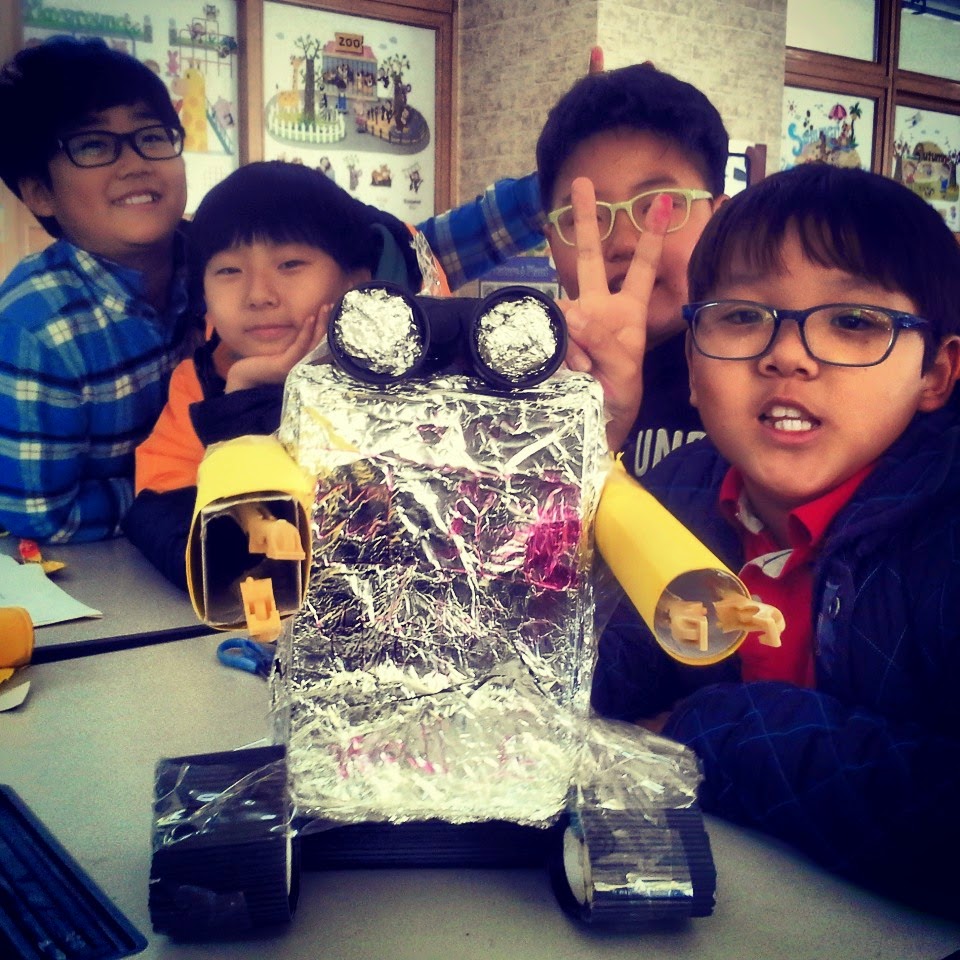
During the winter's English camp, we watched Wall-E and made robots using materials from home. It was a basic lesson about recycling, but the kids really enjoyed it. The class was split into teams and each team designed and constructed an original robot. One team, using a cereal box, toilet paper tubes, corrugated cardboard, tin foil, and binoculars, were able to replicate Wall-E almost perfectly. Pretty impressive for 4th grade students.
The story could end here, but of course, it doesn't. This robot was unanimously voted to be the best of the class, but I didn't think it would ever leave the assembly line. These four guys spent the first 20 or 30 minutes arguing and huffing glue. Not just any glue. One of them came in with some kind of industrial strength adhesive...an entire tube of it. I first noticed when I heard some shouting and looked up to see two of them arguing over how to attach the tin foil. Pretty reasonable argument for a group of 9-year olds to be having. The strange thing was, as they argued their case, they were literally PASSING the tube of glue back and forth and sniffing it...really sniffing it, (I realize that this is pretty typical of young kids with glue, permanent markers, etc., so it wasn't necessarily the fact that they were sniffing the glue, it was more the humor of watching two kids plead their case, sniff, and pass a tube of glue to one another like some kind of piece pipe). Immediately, I intervened and suggested that they wrap the different parts with the foil and then simply tape it in place. More importantly, I used my best sign language to tell them that what they were doing with the glue was really bad for them, (point to glue--point to nose--sniffing sound--pretend to vomit--make "X" with arms). They appeared to understand and went back to work.
I'm circling the room, assisting the other groups when I hear it again. Sniffing sounds. In close succession. I turn around and sure enough, the huffing has commenced once again, only this time, while one student is feverishly marking and slicing the cardboard, his friend is holding the glue under his nose as he takes a quick sniff. The glue is then passed among the circle with each student having their go at it. I think I should back up for a second. I deliberately said "slicing" the cardboard, not "cutting" the cardboard and there's a sound reason for this. Box cutters are common classroom tools among Korean students. On the inside of every Iron Man, Angry Bird, or Elsa pencil case rests something that looks like this:
The first time that I witnessed a student pulling one of these out and unsheathing the blade, I almost tackled him. Lucky for him, I paused mid-charge as I watched him use the razor to sharpen his pencil. I then noticed that I hadn't seen a single rotary pencil sharpener anywhere in the school. He calmly, and (somewhat) safely shaved the dull tip of his pencil into a point, slid the blade back down, and secured the weapon in his pencil case. Since then, I've seen these tools used in a variety of different ways, primarily as pencil sharpeners and as a substitute for scissors, but kids are creative so they find all sorts of ways to have fun with these things.
When not being used practically, these box cutters make great tools for slicing small chunks out of rubber erasers. Said chunks are then used as projectiles against other students, usually while the teacher's back is turned, (or so they think). One time, a box cutter was used to slice long, slender strips of rubber from the side of a desk. These strips were then employed to poke other students in the back of the head from a distance of about 12 inches away. Another time, I watched as a student sharpened his pencil only to covertly dump the shavings into another student's hair. As a former mischief maker myself, I inwardly had to applaud the ingenuity, but as the resident adult I also had to send the aspiring young villain to the back of the room and make him write sentences.
Although the razors are used to forge "weapons" I have never, ever seen a student use one of the box cutters as a weapon or as a device with which to threaten, intimidate, or instill fear. The only time that I ever cringe when one of these is taken out is when a student is "changing" a dull blade. Rather than replacing the entire blade, the dull tip of the blade is muscled back and forth until it snaps off.
Back to the glue.
So I've now witnessed these kids form a glue huffing circle for the second time. I'm a fan of baseball, so my policy is usually "three strikes and you're out". This works pretty well when it comes to quieting kids down but when it comes to sniffing glue, two strikes is plenty. Without saying a word I walk over and confiscate the glue mid-rotation, replacing it with a glue stick that they couldn't really huff and thankfully, did not attempt to eat.
In case you haven't heard, kimchi (sometimes spelled gimchi) is the most highly revered food in Korea. The fermented cabbage often turns up in soups, stews, as pancakes (think potato pancakes, not the breakfast kind), and on pizza, burgers, and sandwiches. I think it's great when grilled with pork, or fried with some eggs. It's eaten every day at every meal by every one. I've been told that some Koreans will even bring a stash of kimchi with them if they are travelling to another country (or even space). Basically, this stuff is more like a national treasure than a national dish.
How does it taste?
Like anything else, the taste varies from place to place. Typically, I'd describe it as a spicy sauerkraut. I've had really spicy kimchi, mild kimchi, sweet kimchi with pine nuts (the best), good kimchi, great kimchi, not so good kimchi, not so bad kimchi, bad kimchi, terrible kimchi, average kimchi, kimchi fired shrimp, shrimp fried kimchi, grilled kimchi shrimp, sauteed shrimp and kimchi, shrimp burger with kimchi, kimchi burger with shrimp, lobster stuffed with shrimp and kimchi, kimchi stuffed with shrimp and lobster... How's it made?
Excellent question! The ingredients are few: cabbage, garlic, radish, carrots, dried red pepper, dried anchovies, anchovy sauce, a jar of tiny shrimp (see below)...
Cabbage
Daikon Radish
Dried Anchovies, Anchovy Sauce, Jar O' Shrimp
Now that we have everything we need, it's time to start the process. First, the cabbage needs to be soaked in brine for about 12 hours. Just dissolve some salt, (We learned with a Korean who has been doing this since she was a little girl. Nothing was measured with utensils.), into some water and pour it over the cabbage...which should be in a large bowl...now cover the bowl of salty cabbage and let it soak overnight.
Assuming that 12 hours have passed, drain and rinse the cabbage. Now the fun begins. Take your dried anchovies and boil them in water to make a stock. I forgot to mention that you'll also need some rice powder. The rice powder is boiled until it becomes a paste. I'm really not sure about measurements here...Ours had the consistency of Elmer's Glue when it was finished:
The above mixture and some of the stock...we used about 1/4 of it...will be mixed with the red pepper flakes, some anchovy sauce (basically use this to salt the mixture to taste), and 1/2 of the shrimp jar. To give you an idea of how much red pepper we used, here are some photos of the mixture:
Chop about 10 cloves of garlic and the 2 carrots and add them to the mixture. The final result will look something like this:
Now it's time to cover the cabbage. Cut each head of cabbage in half and use the red pepper mixture as a coating. Don't be afraid the rub the mixture into all of the nooks and crannies and don't forget to wear gloves, this stuff will stain your hands (and if you're anything like me, you'll somehow end up getting the mixture inside of the gloves and up your sleeves).
Slice the radish into thick circles and cover them with the red pepper paste as well. When you finish dousing your cabbage, fold it up into a little ball and place it in the special kimchi container.
After you finish with the radish and cabbages, pour some of the remaining sauce into the container. Slap a lid on that mess and stick it in your fridge for a month.
There you go. You should have enough kimchi to supplement long overland travel, office gatherings, baseball games, walks in the park, movie nights, game nights, deep sea exploration, intergalactic space travel...
A few months ago, I wrote and submitted an article (at almost the last minute possible) for a Travel Writers Contest through www.goabroad.com. All entries were required to adhere to one of the three prompts: "A Guidebook with a Twist," "Travel Feature," or "Top Five/Top Ten List". I'm not a big fan of lists so I chose the second category which was described as follows:
"This is a colorful and informational feature about some sort of activity, event, social custom, or unique tradition that travelers might want to try and experience while abroad."
And I sort of merged it with the first category by writing a guide to going out Korean Style....or basically a guide to survive a night of binge eating and drinking with Korean friends.
A few days after the deadline, the winners and honorable mentions were announced and my name wasn't listed. A few weeks after that, I woke up to an email from one of the Outreach Managers at Go Abroad saying that though I didn't win, they enjoyed my piece and would like to feature the article on their website in the coming weeks. They'd contact me soon to let me know.
"Sure," I said to myself aloud like a crazy person. "It's not like any other publications are kicking in my door."
A month goes by and I don't hear anything so I figure that my article has been shelved or maybe they emailed the wrong guy or maybe they came to their senses or maybe they were drunk and then came to their senses...anyway, I pretty much forgot about it.
That is, until last night when after a rough day at school followed by an equally shoddy performance at the gym, I came home to an email saying that my article was up and it can be viewed here. It's not my best work. Not at all. My voice is really lacking and reading through it again, I get the feeling that I was trying to sound like sometwo-bit hack with a blog. In my opinion, the best part is easily the "About Me" section at the bottom of the page.
If you're feeling generous, give it a read and click on one of the three social media buttons on the right.
Lastly, I want to thank the family and friends who have been encouraging me to take my writing endeavors more seriously. I promise not to forget you when I'm accepting my first Nobel Prize for Travel Bloggers.